
Before scaling ad budget: What to fix first to protect your ROI
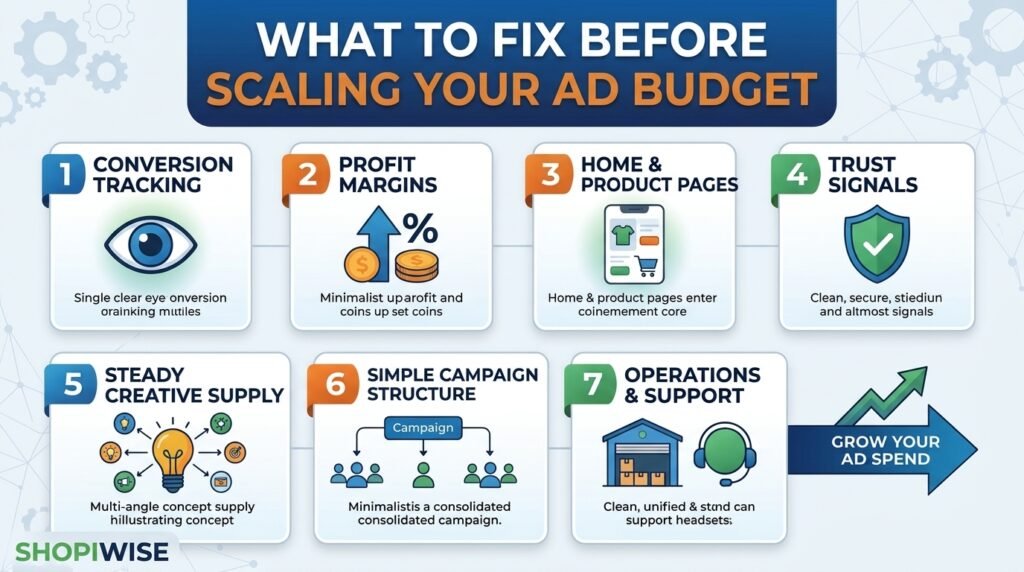
What to Fix Before Scaling Your Ad Budget Your ads are bringing in sales, so the next move feels obvious: spend more. But raising the budget does not fix problems. It makes them bigger. A leaky checkout, shaky tracking or thin profit margins can be easy to ignore at a small budget and expensive at a large one. This guide walks through what to fix before you scale your ad budget, how to check each area, and how to increase spend without panicking when results wobble. It is written for Shopify store owners and online sellers, and the ideas apply to Meta, TikTok and Google campaigns alike. What Should You Fix First? Before scaling, make sure your tracking is accurate, your profit survives ad costs, your store converts visitors well, you have fresh creative ready, your campaigns are simple enough to learn from, and your operations can handle more orders. Then raise the budget in controlled steps. Why Scaling Exposes Weak Spots At low spend, a small problem hides in the noise. A page that loses a few shoppers or a margin that is slightly too thin barely registers. At higher spend, you pay for every one of those losses at scale. Costs also tend to rise as you spend more, so doubling your budget will not necessarily double your results. That is why the smartest move is often to strengthen the foundation first. The checklist below covers the seven areas worth reviewing. The 7 Things to Fix Before You Scale 1. Conversion Tracking Ad platforms use your purchase data to decide who sees your ads. If that data is incomplete, the system is working with a blurry picture. Compare the purchases reported in your ad account with the orders in Shopify. Some guides recommend sending order data from the store backend as well, because browser-based tracking can miss sales. If the numbers are far apart, fix tracking before spending more. 2. Profit, Not Just Revenue A campaign can look great on return on ad spend and still lose money. Work out your margin after product cost, shipping, payment fees, returns and refunds. Then calculate the cost per purchase you can actually afford. Only scale products where the numbers still work with higher ad costs. 3. Homepage and Product Pages A shopper should understand what you sell within seconds. On product pages, answer the questions buyers usually have about sizing, materials, delivery and returns. Clear photos and plain language matter more than clever design. If many visitors leave without browsing, new traffic will not help. 4. Trust Signals Strangers arriving from an ad need reasons to trust you. Show genuine reviews, clear shipping and return policies, visible contact details and secure payment options. Never invent reviews or testimonials. They can mislead customers and break advertising rules. 5. A Steady Supply of Creative Ads wear out faster when more people see them. Before scaling, have several new angles ready, such as a problem-focused video, a customer-style demo and a benefit-led image. Testing different messages, not only different audiences, gives the platform more to work with. 6. Simple Campaign Structure Many small campaigns split your data into thin slices. Ad platforms generally learn better when conversions are concentrated in fewer, cleaner campaigns. Consolidate where it makes sense and avoid constant edits that restart learning. 7. Operations and Customer Support More orders mean more packing, shipping and customer questions. Check that you have enough stock, reliable suppliers, realistic delivery times and a support process that does not collapse under volume. A surge of late deliveries and refunds can cancel out your ad gains. Quick Pre-Scale Checklist Area What to check Warning sign Tracking Ad account purchases vs Shopify orders Large, unexplained gap Profit Margin after ad cost, fees and returns Break-even or negative at current cost per purchase Store Mobile speed, product pages, checkout Many visitors, few add-to-carts Trust Reviews, policies, contact details No visible policies or proof Creative New ads ready to test Only one or two ads running Structure Number of campaigns and ad sets Many tiny campaigns with few conversions Operations Stock, shipping, support capacity Slow replies or delivery delays already A Simple Example Imagine a store selling kitchen gadgets. One ad earns a good return, so the owner triples the budget. Sales rise at first, then costs climb and refunds increase. A review shows that tracking was counting some orders twice, the product page did not explain size clearly, and returns were eating the margin. After fixing tracking, updating the page and raising prices slightly, the owner scales again in smaller steps and the numbers hold. This is an illustrative scenario, not a real client result. How to Scale Once You Are Ready Advice on pacing varies. Older guidance suggested small increases of roughly five to twenty percent to avoid restarting the learning phase. Some experienced advertisers now say Meta handles budget increases more smoothly than it used to. Either way, costs usually rise at higher spend and results can change, so a measured approach is sensible. Scale proven ads first. Increase spend on campaigns that already perform well, not on weak ones. Raise the budget in steps. Make a moderate increase, then wait for results to settle before the next one. Watch the right numbers. Track cost per purchase, conversion volume and your real profit, not only return on ad spend, which can lag behind. Keep launching new creative. Add fresh ads while you scale, so you are not depending on one winner. Set a rollback rule. Decide in advance when you will lower the budget, for example if cost per purchase stays above your limit for several days. Common Mistakes to Avoid Doubling or tripling the budget overnight because one day looked great. Judging success by revenue and ignoring margin, refunds and shipping costs. Scaling before tracking has been checked against real orders. Constantly duplicating campaigns or tweaking audiences instead of fixing the store. Running out of stock or support capacity just as sales rise. Relying